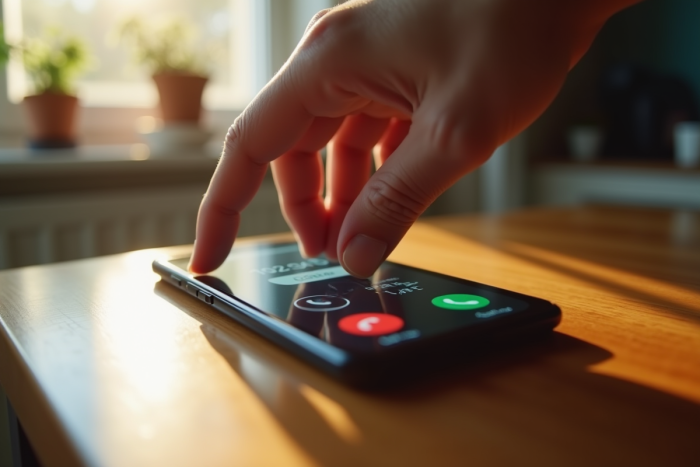
A call that appears without a name, face, or clue on the screen: in France, every day, thousands of phones vibrate to the rhythm of these unknown numbers. Behind the receiver, the promise of an opportunity or the risk of a trap? In the face of the increase, the reflex is no longer so simple.
In France, telemarketing is supposed to remain under control, framed by precise laws. Yet, violations abound. Automated platforms find a way around by using hidden numbers or those from abroad, thus escaping traditional filters.
Some companies play the “gray” card, taking advantage of gaps in the regulatory framework to discreetly contact millions of people every day. This is compounded by increasingly inventive scams, which turn every anonymous call into a potential source of trouble or danger.
Why are unknown calls multiplying and what risks do they pose to users?
The explosion of unknown number calls reflects a rapid transformation of digital usage. This new generation of telemarketing relies on the proliferation of robocalls and call centers abroad. Spoofing technologies and phone number impersonation blur the lines. Now, the boundary between a commercial solicitation and a phone scam becomes unclear. Artificial voices, generated by voice deepfake, manage to deceive even the most vigilant.
This wave of fraudulent calls undermines the enhanced consumer protection. Voice phishing is gaining ground, as are illegal solicitations, particularly in energy renovation, a field where regulations still leave loopholes. An anonymous call can hide much more than a simple commercial offer: sneaky collection of personal data, resale on the dark web, large-scale data breaches. Phone spam has become part of daily life, fueled by files from leaks or by endlessly recycled old consent lists.
Pushed to their limits, users hesitate: should one answer calls from unidentified numbers, or remain cautious? Suspicion sets in, trust erodes. The question arises: I want to know who owns this number. To navigate this, vigilance and regular verification become the rule, with the help of appropriate tools. Impersonated numbers confuse the cards, encourage caution, and remind us that protecting one’s privacy is never a given.

Recognizing telemarketing, blocking unwanted numbers, and avoiding scams: practical tips and feedback
The increase in telemarketing calls calls for new attention. When an unknown number appears, the temptation to pick up remains strong, often out of habit. However, certain signals hint at the nature of an unwanted call. Here are the main indicators to help identify them:
- Calls from unusual international numbers
- Absence of any identification at the time of the call
- Pre-recorded messages played in a loop or unusual insistence
Fraudulent calls exploit these triggers, counting on a moment of distraction or daily routine to trap their target.
To limit risks, several steps are necessary:
- Request the services of your mobile operator to block dubious calls and report unwanted calls.
- Register your number on an opposition list like Bloctel, to restrict unsolicited commercial solicitations.
- Activate a spam filtering app or an antivirus on your smartphone: many tools automatically identify and stop suspicious calls.
The legal framework sets strict rules for telemarketing: the necessity of prior consent, prohibition of contact on certain days, and the gradual generalization of number authentication. Professionals must comply with opposition to telemarketing and adhere to clear obligations. But technology advances rapidly, often faster than regulations can adapt. Take the example of users who, by reporting abusive calls, have seen the responsiveness of platforms improve under collective pressure: a concrete and effective response to the nuisance.
To enhance security, it is essential to combine technical solutions, collaborative reporting tools, and rigorous management of prior consent. Number authentication, currently being deployed by operators, represents one of the most promising safeguards against massive phone identity theft.
The phone, once a tool of trust, has turned into a minefield. It is up to each person to invent their own defense strategy, balancing automation, distrust, and technology. In this silent ballet of anonymous calls, vigilance has never been more valuable.