14%: this is the growth displayed by investments in industrial robotics in France in 2023. Meanwhile, the number of graduates specialized in mechanical maintenance struggles to meet demand, as highlighted by the UIMM. Another notable fact: European regulations on emissions now affect light commercial vehicles, forcing manufacturers to rethink their hybrid engine development strategies.
On the ground, a wind of innovation is already blowing. Some machining SMEs are betting on additive manufacturing for aluminum, while on automotive assembly lines, artificial intelligence is being used to spot defects on the fly. Partnerships are multiplying: historical manufacturers and start-ups are joining forces to accelerate the shift towards electric and hydrogen.
What is the state of industrial mechanics in France in the face of technological and environmental challenges?
The sector is undergoing a phase of brutal transformation. With 32,000 companies and 600,000 jobs, French mechanics is scaling up. Mergers after acquisitions, strategic alliances, and research pooling: everything is converging towards more efficient production lines, capable of meeting the challenge of competitiveness and aligning each process with the requirements of the energy transition. Environmental regulations are tightening month after month: manufacturers have no choice but to rethink all schemes to reduce carbon footprints or risk falling behind at the first turn.
In the automotive sector, the shock is direct. Electrification, vehicles packed with software, rapid development of driver assistance systems—it’s impossible to ignore the shift. Companies that master connectivity, intelligent diagnostics, or electronic integration are shaking up the old guard. The value chain itself is being disrupted, pushing some historical players to rethink their models, sometimes painfully.
This renewal is observed through the news on Actu Mécanique. On the ground, the race for modernization is on: automation, cutting-edge robotics, intelligently directed investments. Reducing emissions is no longer a choice; it is a condition for survival. The most responsive companies are getting ahead; others must accelerate or risk being absorbed or simply left behind.
Overview of innovations in machining and automotive: materials, automation, renewable energies
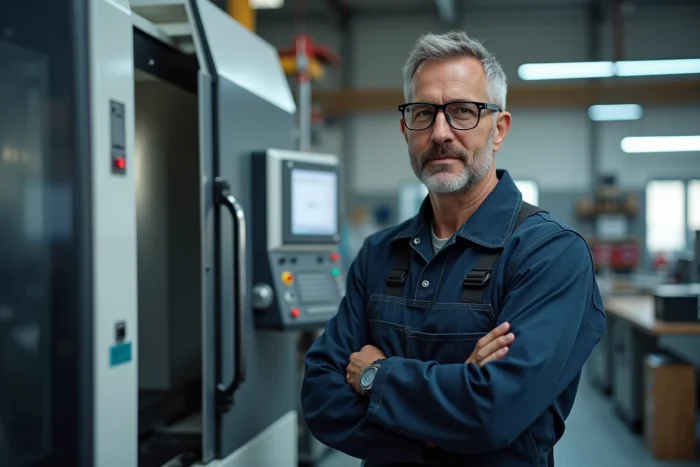
In precision machining, technological breakthroughs are embodied in 5-axis CNC machines and increasingly advanced automation. These tools are transforming the workshop: production of complex parts, surgical precision, shortened lead times. Connected workshops integrate smart sensors linked to industry 4.0 systems: here, monitoring is done in real-time, maintenance becomes predictive, and every detail is optimized on the fly by artificial intelligence algorithms.
Additive manufacturing is establishing itself alongside traditional processes. Accelerated prototyping, design of unprecedented geometries, limitation of material waste: the transformation is underway. New hybrid equipment, true industrial Swiss Army knives, combine milling, turning, and 3D printing. They allow for the invention of custom assemblies, tailored for personalization, without extending manufacturing times. Business software is evolving thanks to simulation or augmented reality, simplifying programming and reducing the risk of human error.
On the automotive side, the battle is now fought over materials: carbon fiber composites, lightweight alloys, reinforced technical plastics… These innovations reduce weight, extend vehicle lifespan, and enable cleaner recycling. Electric vehicles are asserting themselves with their lithium batteries, intelligent energy management systems, and abundant onboard electronics. But the horizon remains open: hydrogen, biofuels, or solar panels are already entering decision-making processes. Cybersecurity, meanwhile, is climbing to the top of the list, protecting all data exchanged between connected systems. The overall dynamic aims for increased performance with an environmental impact finally under control.

What future awaits professionals in the sector and the French market by 2030?
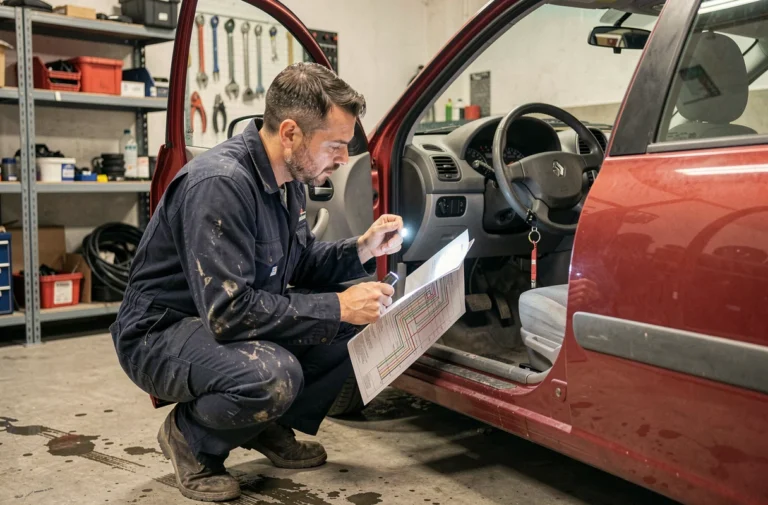
The French industrial fabric comprises around 32,000 mechanical companies and no fewer than 600,000 direct jobs. And this is just the beginning: the decade promises to be tumultuous. On the ground, today’s technicians and mechanics are no longer limited to traditional mechanics. Now, they calibrate sensors, validate ADAS, and dissect the interconnection of electronic modules. With the rise of electric vehicles, managing high voltages has become essential, as has mastering sophisticated diagnostic tools and engaging with technical data.
Workshops are facing new demands and must equip themselves accordingly:
- Precise mastery of sensor calibration and in-depth control of driver assistance systems (ADAS)
- Safe handling of batteries and strict adherence to environmental standards
- Technical expertise to manage emerging generations of vehicles
The spare parts sector is entering a new era, shaken by digitalization and the rise of alternative powertrains. Processes are becoming automated: sorting and waste management, safety in battery handling, complete traceability of operations. Many still rely on the solid foundations of the automotive mechanical DEP, but continuous skills updating is becoming the norm to avoid falling behind.
Distribution is also changing its face. Purchasing habits are evolving: the wave of electric, hybrid, or ultra-connected vehicles is destabilizing established norms. The used market is strengthening, requiring enhanced expertise in diagnostics and refurbishment. Ultimately, staying in the race means investing in continuous training, which is impossible to bypass in a sector undergoing an energy transformation.
A reality is emerging: those who can combine the heritage of the profession with mastery of the most advanced technologies will shape the French mechanics of tomorrow. Others risk remaining spectators, stuck on the sidelines while the digital and robotic caravan moves forward, undeterred.