
Hoka shoes use an EU sizing system in thirds (40, 40 2/3, 41 1/3), rather than standard half sizes. This explains why a usual 42.5 in another brand does not correspond exactly to any size in Hoka’s chart. Choosing the right size therefore means using your foot measurement in centimeters, not your usual shoe size.
Measuring your foot in centimeters: the only reliable way to find your Hoka size
The size printed on a shoe is a convention, not a physical measurement. Two brands that list a size 42 EU can differ by several millimeters in internal length. Hoka sizing is based on your foot’s actual length.
To measure your foot, place it flat on a sheet of paper with your heel against a wall, mark the tip of your longest toe, then measure the distance in centimeters. Repeat for both feet: a difference of a few millimeters between your left and right foot is common, and you should use the measurement of the longer foot to determine your size.
A Hoka men’s size guide explains how centimeters correspond to EU, UK, and US sizes, so you don’t have to switch between multiple charts. The centimeter column is the one to use as your reference.
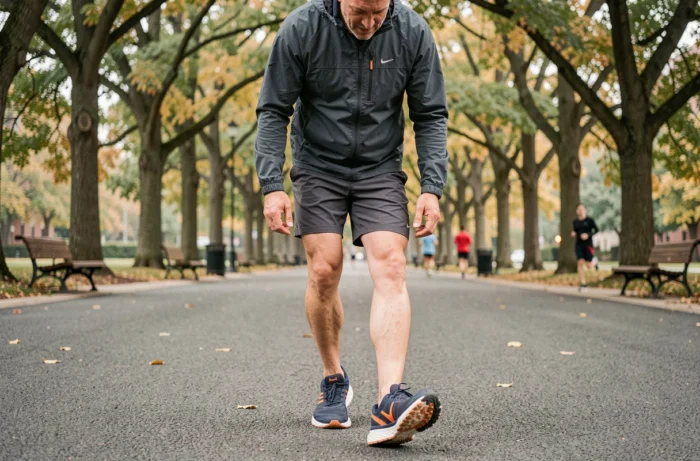
Hoka fit by model: Clifton, Bondi, and Speedgoat don’t fit the same
Applying one rule (“always go up half a size”) to every Hoka model is a common mistake. The fit varies considerably from one model to another, even within the same range.
The Clifton and Bondi, designed for road running and long-distance cushioning, offer a relatively roomy forefoot. The performance-focused Mach has a closer fit to limit foot movement at high speeds. Designed for trail running, the Speedgoat combines enhanced lateral support with a toe-box volume that varies by version.
One detail size charts don’t show: the fit can change between versions of the same model. Automatically choosing the same size as your Clifton 8 when ordering a Clifton 9 is no guarantee of a good fit. The internal shape, upper materials, and placement of reinforcements change with each iteration.
Foot width and wide versions
If you have wide feet, going up a size in length can cause problems. A shoe that’s too long lets your foot slide forward, causing heel friction and destabilizing your stride. Hoka offers wide versions of some models (including the Clifton, Bondi, and Arahi), which make the shoe wider without changing its length.
- Check the length, forefoot width, and heel hold separately before settling on a size
- The “wide” label doesn’t necessarily add room around the toes; it mainly widens the midfoot area
- If the discomfort is concentrated along the sides or at the tips of your toes, trying a wide version may not be enough: you still need to try the shoes on
Comfort when trying them on versus comfort after ten kilometers: distinguish fit from cushioning
Hoka shoes can feel perfectly fitted in the store but become uncomfortable after several kilometers of running. This often leads to the wrong diagnosis: the size gets blamed when the problem lies elsewhere.
Your feet swell and lengthen slightly during exercise. During a marathon or long trail run, this swelling can add enough volume to turn a comfortable fit at rest into painful compression. That’s why many runners go up half a size for long runs, regardless of the brand.
Identify the source of discomfort
A black toenail or pain at the tips of your toes usually indicates a length issue: the shoe is too short, or your foot is sliding forward in an oversized shoe that isn’t laced properly. Pain across the top or sides of your foot is more likely to point to a volume or lacing issue.
- Pain around the toes after several kilometers: check the length and lacing before switching models
- A squeezing sensation across the width of your foot: try a wide version or a model with a roomier fit (Bondi rather than Mach)
- Heel rubbing: your foot is moving too much inside the shoe, which may mean it’s too large or lacks rearfoot support
- Generalized foot fatigue without a specific pressure point: the issue is probably the cushioning or the shoe’s heel-to-toe drop, not the size
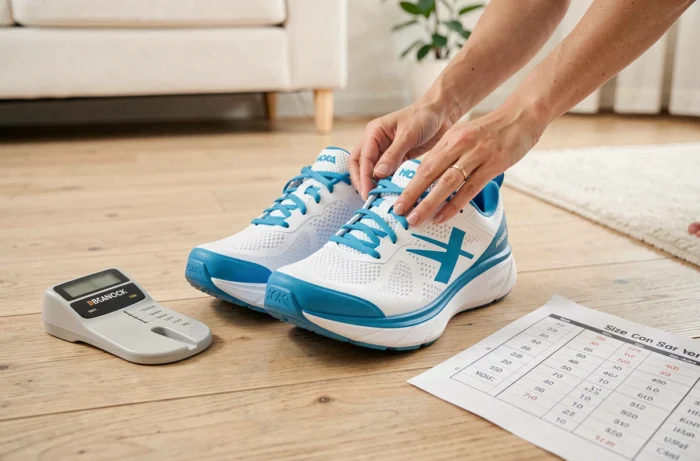
Hoka shoes for trail running and marathons: adjust your size to the distance
The recommended size depends on how you plan to use the shoes. For short road runs, your foot measurement in centimeters, converted using Hoka’s chart, works as is in most cases.
For a marathon or ultra-trail, allowing an extra half size compared with your resting size helps accommodate foot swelling. This extra room shouldn’t create excessive heel slippage. Adjusting the lacing (tighter over the midfoot and looser at the forefoot) helps compensate for the added length.
The terrain matters too. On technical trails, repeated lateral movements put pressure on the sides of the shoe. A model like the Speedgoat, with its pronounced lateral support, may feel narrower than a Clifton in the same size. Testing the shoe on a downhill slope (even on stairs) gives you a better idea of how it will perform than taking a few steps on a flat store floor.
Hoka’s unique third-based sizing system, combined with differences in fit between models and successive versions of the same model, makes measuring in centimeters and trying on each pair more reliable than any general rule. Measure your feet, test the model standing and moving, and adjust the extra room to the distance you plan to run: these three checks eliminate most sizing mistakes.